Loop Quest
- 4.1
- Rating
- 10.00K
- Installs
- Free
- Price

 Analysis by App-foxy
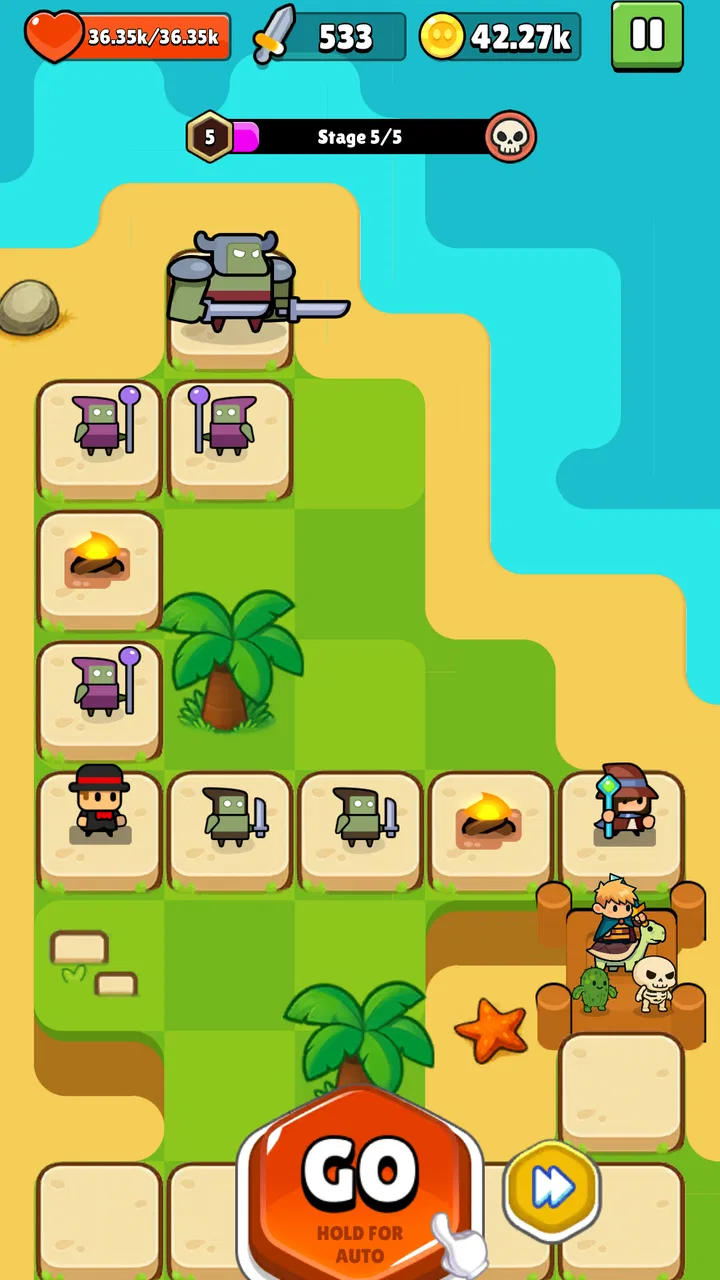
I spent time with Loop Quest, a free board game from GRAND-ATTIC that turns a familiar dice-and-progression idea into a compact adventure about collecting treasure and facing enemies. Its basic appeal is easy to understand: make a move, see what the dice bring, decide how to use the result, and keep pushing forward. What matters in practice is how comfortable that loop feels when you play for a few minutes, how much attention it demands, and whether its presentation works for different people and different situations.
My overall impression is positive but specific. This is best suited to players who enjoy light strategy wrapped in a board-game structure, especially when they want something more active than a traditional digital board game but less demanding than a large role-playing game. It is not the kind of experience I would choose when I want a deep campaign, a quiet puzzle with no pressure, or a highly configurable interface. The current version, 0.10.2, feels like a focused game built around its central loop rather than a huge collection of modes.
The game is available at no upfront cost, although optional in-app purchases range from $0.99 to $99.99 per item. That makes the first step easy, but it also means I would approach progression with a little discipline. I would play naturally before spending anything, learn which decisions actually help, and treat purchases as optional rather than necessary. That approach is particularly useful for younger players, since the content rating is Teen and any buying decisions should be handled carefully.
You May Also Like

 Blood Strike: 2.5 Anniversary
Blood Strike’s Loadouts Turn Every Drop Into a Tactical Gamble
A close look at Blood Strike’s custom loadouts: how fast access to signature weapons reshapes its battle royale rhythm, rewards preparation, and narrows the gap between fights.

 Pandora - Music & Podcasts
Pandora’s Music Is Easy to Start, but Harder to Recover
Pandora’s strength is its low-effort path from a seed to a station. Its weak spot is how much confidence it asks you to place in connection, setup, and quiet recovery.

 8 Ball Pool
 Is Built on Rivalries, Rematches, and Routine
A close look at the rivalries, rematches, shared routines, and unanswered safety questions that turn a quick pool match into a persistent mobile community.

 Samsung Music
’s Quiet Strength Is Playing What You Already Own
Its reach comes less from spectacle than from dependable access to a personal library. That simplicity is both the app’s strongest retention engine and its ceiling.

 AccuWeather: Weather Radar
AccuWeather Review: A Quick, Clear Forecast for Everyday Decisions
For everyday plans, the best forecast is the one you can understand quickly. AccuWeather makes rain timing, radar, and local conditions easy to act on, with a few trade-offs.

 Hill Climb Racing
Why Hill Climb Racing Still Turns Crashes Into One More Run
A tiny car, a bumpy hill and one more upgrade: Hill Climb Racing keeps resurfacing because its simple chaos makes every near-miss feel personal.
More From Our News Desk
View All News


How Loop Quest feels to play in everyday situations
I find the everyday appeal of Loop Quest less about squeezing in a whole adventure and more about having a small decision to focus on between other things. A brief session can be a better fit than playing while multitasking, since noticing what each roll changes is part of the fun. That makes the setting and the way you approach each turn worth considering before looking at who is most likely to enjoy it.
Readability and navigation during a normal session
The strongest part of the design is its immediate premise. Rolling dice, claiming rewards, and dealing with enemies gives each turn a clear purpose. I never needed a complicated explanation to understand what I was trying to accomplish. That clarity is valuable in a board game because the pleasure comes from weighing the next move, not from decoding an overstuffed interface.
I found it helpful to treat each turn as a short planning exercise instead of simply tapping through the most obvious option. A treasure may look attractive immediately, but an enemy encounter can change the value of what comes next. My practical advice is to pause briefly after every roll and ask what the result improves: immediate progress, future safety, or a better chance of collecting something useful. That small habit makes the game feel more strategic without turning it into homework.
The board-game format also gives the action a recognizable rhythm. There is a beginning to a run, a series of decisions, and a natural point at which I can stop. That makes it easier to fit into spare time than a long-form adventure that expects me to remember several simultaneous objectives. I could imagine playing while waiting for an appointment or taking a short break, provided I was in a place where tapping and concentrating were comfortable.
Navigation is most approachable for people who prefer a direct game structure. Players who like menus full of detailed character statistics, equipment comparisons, and long quest logs may find the presentation less satisfying. The appeal here is the repeated decision cycle, not the feeling of managing a large virtual world. If you want to know exactly what to do next, the central objective is understandable; if you want a carefully organized encyclopedia of every system, this is a lighter experience.
For readability, I paid attention to the difference between knowing the goal and quickly identifying every piece of information on screen. The first is straightforward. The second depends more on how comfortably you can distinguish board elements, rewards, enemy information, and action controls during play. I would recommend trying a short session before committing emotionally or financially, especially if small visual details are difficult for you to track. A game can be conceptually clear while still being tiring to read.
One useful routine is to play with the screen positioned directly in front of you rather than at an awkward angle. Board layouts often rely on spatial relationships, so a little distance or glare can make a familiar turn feel needlessly confusing. I also prefer playing in short blocks, because repeated dice decisions can become less distinct when I am tired. That is not a flaw unique to this title, but it matters here because the game’s enjoyment depends on noticing small differences between one choice and the next.
Motor and sensory considerations
Loop Quest is built around touch interaction, so its physical demands are more modest than those of an action game that expects rapid swipes or precise timing. In my experience, the important motor question is not speed but accuracy: can you comfortably select the intended board action, reward, or encounter without repeatedly correcting a tap? Players who prefer deliberate input may appreciate that the game’s board structure encourages thinking before acting.
That said, touch controls are not automatically easy for everyone. A player with limited reach, tremors, reduced fine-motor control, or difficulty holding a phone steady may still find repeated tapping tiring. I would use both hands when possible, support the device on a table, and avoid playing while walking. Those simple changes reduce accidental input and make the decision-making side more enjoyable.
The sensory profile is also worth considering. Dice results, treasures, and enemies create a changing visual field, which is part of the game’s excitement but can become busy when several elements compete for attention. If you are sensitive to visual clutter, I would test the game in a calm setting and take breaks before the board starts to blur into one mass of information. Players who are sensitive to sound should also decide whether they are more comfortable using the game quietly or with the device’s audio at a lower level.
I would not describe the experience as physically intense. It does not ask for the fast reactions associated with competitive arcade games, and that makes it a better candidate for relaxed play. However, “relaxed” does not mean effortless for every player. The repeated cycle of reading a result, selecting an action, and checking the outcome can still cause fatigue if your hands or eyes tire quickly. Short sessions are a sensible way to judge whether the interaction works for you.
A practical tip is to separate decision difficulty from control difficulty. If you understand the best move but keep missing the target, the issue is probably the touch layout or your playing position rather than the strategy. If the controls feel easy but every choice seems unclear, the challenge is informational. Identifying that difference helps you decide whether changing your setup will help or whether this simply is not the right kind of board game for you.
Situational access: when the game fits and when it does not
The game’s strongest everyday use case is a short, focused break. I can see it working well for someone who wants a self-contained activity between tasks, during a commute while seated, or at home when there is not enough time for a longer game. The dice-based structure provides variety from turn to turn, while the board format gives the session a clear identity instead of feeling like an endless feed of disconnected actions.
It is less suitable for situations that already divide your attention. I would not play while crossing a street, operating a vehicle, supervising a risky activity, or trying to follow an important conversation. Even a simple board game asks you to notice outcomes and make choices. If you are interrupted every few seconds, the experience loses much of its strategic value and may lead to careless taps.
For a realistic example, imagine having fifteen quiet minutes before a class or appointment. I would start a run, make a few careful decisions, and stop at a natural pause rather than trying to force a complete session. The game works better in that setting than a complex adventure because I do not need to prepare a large inventory or remember a complicated story. On the other hand, if I were sharing that break with a friend and wanted conversation to remain central, I would choose a genuinely social board game instead.
It can also suit players who find traditional board games appealing but want something that handles the bookkeeping. Dice results, rewards, and enemy progress are managed on the device, so there is no physical setup to arrange and no pieces to lose. The trade-off is that the social presence of a table game is reduced. You are receiving the structure of a board game without the face-to-face negotiation, laughter, or tactile pieces that make a physical version special.
Compared with a conventional digital board game, Loop Quest seems more focused on adventure progression than on recreating a familiar tabletop title. That makes it more attractive if you want treasure and enemies to give the turns a sense of direction. A classic board-game adaptation is probably better if you want recognizable rules, direct competition with friends, or a faithful tabletop atmosphere. Compared with an action role-playing game, this one is easier to approach physically, but it offers less of the excitement that comes from movement, reflexes, and real-time combat.
It is also worth thinking about the age rating and the audience around you. The Teen rating means I would not automatically hand it to a young child without checking whether its themes and purchase options fit the family’s expectations. For an older player, the rating may be unimportant; for a parent, it is a useful reminder to supervise access to optional spending. The game is free to start, but “free” should not be confused with a completely purchase-free environment.
Where the experience still has barriers
The first barrier is the uncertainty that comes with a compact game whose enjoyment depends heavily on its central loop. If dice outcomes and repeated board decisions do not appeal to you, the attractive theme will not solve that problem. Some players enjoy randomness because it creates surprises; others want outcomes to reflect skill more directly. Loop Quest sits closer to the first group, so people seeking complete control may become frustrated.
The second barrier is the lack of a natural substitute for every kind of access need. Touch interaction can be convenient, but it still assumes that the player can see the relevant elements, hold a phone, and select controls accurately. I would not recommend assuming that a player’s usual accessibility setup for another game will automatically work here. The sensible approach is to test the opening experience personally and adjust the physical environment before deciding.
Attention can be another obstacle. The game may be easy to understand at the broadest level, but meaningful play still requires noticing what a roll changes and whether a reward is worth taking now. People with limited concentration may prefer playing one short segment at a time, with notifications silenced and the device placed somewhere stable. That is a more realistic way to enjoy it than expecting yourself to maintain focus during a noisy or interrupted period.
There is also a progression trade-off connected to optional purchases. I like that the game can be tried without an upfront payment, but the wide purchase range means I would avoid making a decision immediately after a lucky or frustrating turn. Waiting until I understand the normal rhythm of play helps separate genuine enjoyment from the urge to speed up progress. For families, I would keep purchase approval with the adult rather than treating the game’s free entry as permission for unrestricted spending.
Players who need extensive customization may want to look elsewhere. A game centered on dice, treasure, and enemies can be enjoyable without many settings, but people who require a very particular text size, control arrangement, contrast treatment, or input method may find that a more accessibility-focused title is a safer choice. I am not saying the game is unusable; I am saying that its suitability should be judged by direct testing rather than by the simplicity of its premise.
The current audience size gives a modest sense of interest: the game has passed 10K installs, with an average rating of 4.1 from around 764 ratings and 83 written reviews. I read that as encouraging but not conclusive. There is enough activity to show that the concept has found players, yet not enough for me to treat every edge case as thoroughly represented. If you have a specific access requirement, your own first session matters more than the overall score.
Who should try it, and who should skip it
I would recommend Loop Quest to someone who likes board-game decisions but wants a fantasy-flavored reason to keep rolling. It is a good match for players who enjoy short sessions, moderate planning, and the tension between an immediate reward and a potentially better future move. It may also suit people who want an approachable alternative to a large role-playing game, especially when they have limited time or do not want to memorize a complicated control scheme.
I would be more cautious recommending it to a player who dislikes randomness, needs a highly social experience, or expects a deep narrative campaign. It is also not my first choice for someone who wants intense action, elaborate character building, or a completely distraction-free puzzle. In those cases, a traditional strategy board game, a dedicated puzzle title, or a real-time adventure would probably deliver a better fit.
For players with motor or sensory considerations, I would begin with a short trial in a controlled setting. Place the phone on a stable surface, reduce glare, keep the sound at a comfortable level, and see whether the board remains readable after several turns rather than judging it from the first tap. If the game feels comfortable and the decisions remain understandable, its slower board-game pace can be an advantage. If the interface becomes tiring quickly, no amount of enthusiasm for the theme will make extended sessions pleasant.
The developer, GRAND-ATTIC, has kept the identity of the game easy to grasp: this is a focused board adventure rather than an attempt to imitate every genre at once. That focus is a strength when I want a quick, repeatable activity. It is a limitation when I want variety beyond the dice-and-reward cycle. Knowing which of those moods I am in makes the recommendation much clearer.
My inclusive verdict
After playing it, I see Loop Quest as a pleasant, accessible-in-spirit board adventure with a clear premise and a manageable session structure. Its best quality is that it gives each turn a reason to matter without demanding the physical speed of an action game. For many players, that combination of dice, treasure, and enemy encounters will be enough to make a short break feel purposeful.
Its inclusive appeal has boundaries. The game can be easier to approach than a fast arcade title, but touch controls, visual density, concentration demands, and optional purchases still shape who will enjoy it comfortably. I would not rely on the Teen rating or the free price alone when deciding whether it suits a child, a family member with specific access needs, or someone who is sensitive to spending prompts. A brief hands-on test is the most honest recommendation.
My final advice is to play slowly at first, learn how the rewards and enemy decisions fit together, and avoid paying to accelerate anything until the basic loop has earned your interest. If you enjoy making small tactical choices under uncertain dice results, this is worth trying. If you want social tabletop play, deep role-playing systems, or extensive accessibility customization, choose a different board or strategy experience instead. For the right player, the real strength of Loop Quest is its compact decision rhythm: it is simple to enter, but thoughtful enough to make each roll feel like more than a random tap.
FAQs for Loop Quest
01What is Loop Quest, and how does the gameplay work?
Loop Quest is a game built around repeating runs, exploration, and gradual progress. You guide your character through challenges, collect useful resources, and learn from each attempt. The loop-based structure means that failure is usually part of the experience rather than a complete setback. As you continue playing, you can improve your strategy, unlock new possibilities, and make each run more efficient and rewarding.
02Is Loop Quest free to download and play?
Loop Quest can generally be downloaded without an upfront purchase, but the exact business model may depend on the version available for your Android or iOS device. Some editions may include optional in-app purchases, advertisements, or paid upgrades. Before downloading, it is worth checking the store listing for current pricing, supported payment options, and whether purchases are required to access the main gameplay.
03Does Loop Quest require an internet connection?
The connection requirements may vary depending on the platform and the features included in your version of Loop Quest. Core gameplay may be available offline, which is convenient when traveling or playing without mobile data, while online access could be needed for advertisements, cloud saves, updates, leaderboards, or other connected features. Check the latest store description to confirm the exact offline limitations.
04Is Loop Quest suitable for beginners and younger players?
Loop Quest is approachable for beginners because its repeated attempts allow players to learn gradually instead of requiring perfect performance immediately. However, the difficulty can increase as new challenges and systems are introduced. Parents should review the official age rating, advertising policy, and in-app purchase settings before allowing children to play, particularly if the device has a stored payment method.
05What devices are compatible with Loop Quest, and does progress transfer between platforms?
Compatibility depends on the specific Android or iOS release, so you should compare your device’s operating system version with the requirements shown on the official download page. Performance may also differ on older phones and tablets. Progress transfer between Android and iOS is not always supported, even when the game is available on both platforms, so verify account, cloud-save, and cross-platform support before switching devices.
Pros
- Simple controls make the game easy to pick up and play.
- Short levels fit well into quick gaming sessions.
- Loop-based mechanics encourage experimentation and replayability.
- Clean visual style keeps the gameplay easy to follow.
- Progressive challenges provide a satisfying sense of improvement.
Cons
- Some puzzles may feel repetitive after extended play.
- Difficulty spikes can make later levels frustrating.
- Limited story content may not appeal to narrative-focused players.
- Hints or solutions may be unavailable without extra effort.
- Replay value depends heavily on enjoying score or time challenges.

Loop Quest
Gallery